Lira Neto, Gramsci e os Mesquita
10 de janeiro de 2014 § 17 Comentários
 Julio e Marina Mesquita e filhos em Louveira, 1934 (Ruy Mesquita atrás, em pé)
Tentando refrear a custo o “refugão” que trotava de lado, dava cabeçadas na rédea e ameaçava disparar “Ladeirão” acima, o menino foi derrotado na passagem do portal aberto no muro alto que levava à casa da fazenda: o cavalo atirou-se contra o mourão do lado direito de tal modo que, de cima da sela, ele teve o lado do corpo e da cabeça violentamente “esfregados” na tora de madeira que arrematava o portal.
A orelha direita fervia quando, finalmente, ele conseguiu desmontar e foi só então que sentiu a sangueira que lhe descia pelo pescoço. Levou as duas mãos ao ferimento e sentiu que um rasgo se tinha aberto no ponto em que ela se ligava à cabeça.
Com a dificuldade que lhe impunha o aparelho ortopédico que sustentava a perna direita afetada pela poliomielite, subiu chorando os tres lances de escadas que levavam ao terraço da frente do casarão sem sequer notar a barulheira do rádio que chiava fortemente lá no fundo.
Ao assomar ao longo corredor que compunha o terraço pela largura inteira do frontispício da casa no segundo andar viu, lá no fundo, a figura de sua mãe, o corpo dobrado sobre os joelhos, soluçando alto.
_ Meu deus! Meu deus! Está tudo acabado! Está tudo perdido…
A cena travou-lhe o choro a meio da garganta mas o sangue continuava a descer.
_ Mamãe! Mamãe! Olhe o que me aconteceu!
Dona Marina levantou os olhos, o rosto desfeito em lágrimas, deu uma rápida olhada no machucado do filho e disse-lhe, embargada, meio às pressas.
_ Fazemos uma compressa, chamamos o Antoninho Niero e você vai com ele para São Paulo procurar tio Raul…
 Ruy Mesquita
Antoninho Niero tinha o único automóvel “de praça” do vilarejo de Louveira e tio Raul era o irmão médico de minha avó. Era o 14 de junho de 1940 e o serviço de ondas curtas da BBC de Londres acabara de anunciar a queda da França.
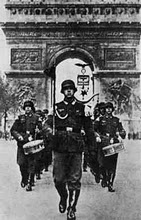
Os nazistas estavam desfilando por baixo do Arco do Triunfo da Étoile, no centro de Paris, fato que Getulio Vargas comemoraria com um discurso que começava com estas palavras: “Uma nova aurora desponta para humanidade…”
Sessenta e tantos anos depois quando, no mesmo velho casarão da fazenda Conceição do Barreiro, em Louveira, São Paulo, Ruy Mesquita descreveu, pela enésima vez, essa cena a uma roda de jovens amigos de seus filhos e netos, a voz subitamente se lhe embargou e seus olhos ficaram marejados. E para minha surpresa, senti no ato que a emoção que acabara de trair aquele senhor tão pouco afeito a demonstrações do gênero à beira dos 80 anos foi, ainda, a da criança desatendida pela mãe num momento de emergência.
Histórias…
Nunca me lembrei tanto das descrições de meu pai dos tempos da sua adolescência e juventude, morando com os tios numa casinha modesta de parede meia – a família economicamente asfixiada, os pais exilados, o jornal O Estado de São Paulo, até hoje a única fonte de renda dos que carregam esse sobrenome, ocupado militarmente pelos soldados da ditadura – acompanhando num mapa pontuado de alfinetes na parede do quarto onde dormia com os primos o desenrolar da guerra na Europa que – eles sabiam bem – selaria, para bem ou para mal, o destino da família, quanto durante a leitura do segundo volume do “Getulio”, de Lira Neto, que relata o que se passou no Brasil entre 1930 e 1945.
 A “guerra” de 32
E era este o cenário que aqueles adolescentes precocemente amadurecidos pela adversidade acompanhavam todas as noites ao som das ondas curtas da BBC de Londres porque simplesmente não havia de quem esperar nada aqui mesmo no Brasil.
Como disse no artigo anterior, o país inteiro – “explorados” e “exploradores” das categorias marxistas em que nossos intelectuais com carteira assinada em Brasília insistem até hoje – estava, todo ele, gostosamente entregue à exploração sem aspas da ditadura getulista.
Tendo tido acesso a documentação até então inédita para escrever seu livro, Lira Neto não pôde evitar de pintar Getulio Vargas como o monstro sanguinário, cínico, nazista, antisemita e inimigo figadal da “democracia dos liberalóides” que ele confessa ter sido a cada minuto que viveu em seu diário pessoal.
Mas mesmo enquanto descreve os atos bárbaros que lhe ditavam esses sentimentos alimentados desde o berço por sua formação primitiva, Lira Neto não consegue disfarçar a sua admiração pelo ditador e, sobretudo, a sua disciplinada antipatia pelos escassos democratas autênticos da “Era Vargas” que, na falta de fatos que lhe sustentem essa opinião, surgem sempre de passagem em seu livro, profilaticamente cercados dos apôdos de “elitista, “quatrocentão” e outros adjetivos da panela no Brasil ainda farta da luta de classes.
 A caminho do exílio (JMF é o 3ro em pé, da esquerda para a direita)
Ponha-se de lado o erro factual de chamar “quatrocentão” o neto de um imigrante miserável e analfabeto vindo do Norte de Portugal que, como ele, arrancava da pena o seu viver no jornal que o pai voltara contra os fazendeiros escravocratas e mais um imperador de troco em plena São Paulo do Ciclo do Café e ele próprio pusera na liderança da guerra que, sob sua batuta, São Paulo teve o desplante de declarar contra o ditador em cujas tetas o Brasil inteiro mamava.
Lira Neto chapa por baixo toda a imprensa da época como uma horda indistinta de vendidos. Registra a destruição e os empastelamens de redações de jornais e até a tortura e morte de jornalistas empregados ordenados por Getúlio. Alonga-se, sempre que pode, nas mamatas e sabujices tramadas e havidas entre o ditador e alguns donos de jornais, mas subtrai deliberadamente aos seus leitores as exceções a essa regra, não, obviamente, por desconhecê-las.
Além de ser “do ramo” e conhecer bem esse lado da história, provavelmente até por testemunhos diretos ouvidos quando, ainda nas redações, não tinha sequer concebido o plano de tornar-se historiador, Lira Neto é um pesquisador eficiente demais para merecer esse perdão.
 Julio Mesquita Filho e o retrato do pai
Ele torce sempre, ainda que inconfessadamente, para o bandido, no mínimo desqualificando os “mocinhos”, mesmo contra toda a evidência dos fatos não apenas por ser gaucho como Getulio foi, o que não é coisa pouca para se superar. É que na cabeça feita de Lira Neto ha de haver, por trás de tudo que venha da “classe dominante”, uma razão de interesse pessoal, um preço, uma jogada desonesta. Nada, nunca, é fruto de um imperativo moral. Tudo sempre é fruto de um cálculo e de um interesse escuso e danem-se os fatos. Esta é a lei.
O rancor especial que ele mostra contra São Paulo e contra o jornal O Estado de São Paulo que sustentaram praticamente sozinhos a resistência contra a ditadura getulista, negando, por absoluta omissão do registro desses fatos, o preço que seus donos pagaram por nunca terem sido “Chatôs”, é a prova mais contundente dessa distorção mas não a única.
São especialmente marcantes, nesse sentido, os capítulos em que, numa mesma sequência, o autor argumenta diretamente, coisa que não se tinha permitido fazer em nenhuma outra passagem dos dois primeiros volumes de sua obra, para negar a “vitoria moral” de SP em 32, embora seja obrigado a relatar, logo na sequência, a nomeação de Armando Sales de Oliveira, cunhado de Julio Mesquita Filho, como interventor em São Paulo por um Getúlio militarmente vitorioso mas politicamente enfraquecido a ponto de ser constrangido a fazer o que mais odiava na vida: recuar e ceder.

Em seu livro a sugestão que fica não é a de uma vitória dos paulistas mas a de um gesto gratuito de magnanimidade do ditador que os paulistas responderam mal agradecidamente e, no extremo, até com felonias.
O fato dos dois cunhados terem aproveitado esse hiato entre exílios para fundar a USP e trazer para animá-la os melhores cérebos daquela época em todo o mundo, plantando, finalmente, o primeiro centro de disseminação do conhecimento científico e de pesquisa universitária digno desse nome no Brasil, também é sonegado aos leitores de Lira Neto, com certeza em função dessa mesma “incompatibilidade de teses”.
Sua descrição da Revolução Constitucionalista de 32 acaba sendo meio enigmática pelo inexplicado conflito entre seu esforço para isolá-la como uma espécie de capricho de uma elite alienada e a realidade histórica da adesão do Estado inteiro a um movimento em que todos arriscavam a própria vida.
É tão disciplinado o seu esforço por negar o papel de Julio Mesquita Filho e de São Paulo nos acontecimentos dessa época que a grande falha do livro são os saltos que ele dá, sempre de repente, da conformidade geral reinante para as grandes manifestações, sempre brutalmente reprimidas a tiros, que estouram esporadicamente em São Paulo contra Getúlio ao longo de todo aquele período.
 Manifestação de estudantes contra Getulio em SP. Ruy Mesquita estava lá e houve mortos e feridos. A bandeira da foto está preservada no saguão do jornal O Estado de S. Paulo.
Ele as registra como se tivessem sempre surgido do nada, dispensando fermentação prévia, e mergulhado de volta no nada. Os paulistas – “elitistas” e “quatrocentões” ou não – que sacrificam a vida nessa luta fazem-no, em seu livro, sempre em nome de nada.
Mas há que perdoá-lo. “A nossa crise não é só política”, como escreveu Arnaldo Jabor esta semana, “é psiquiátrica”.
O livro de Lira Neto continua sendo um grande livro e foi escrito, afinal de contas, neste pais onde os 32 partidos políticos existentes sentem-se na obrigação, por imperativo de sobrevivência, de declarar-se “de esquerda”; onde “progressista” é quem recorre a qualquer grau de violência física ou moral para que tudo se conserve como sempre foi e “conservadores” são os quatro ou cinco gatos pingados que, a cada geração, pagam o preço de tomar posição a favor de que as coisas progridam para mudanças reais.
Ainda que incapaz se superar todo o errado que lhe foi incutido a vida toda como certo nesta pátria do triunfo de Antônio Gramsci, Lira Neto dá sucessiavs provas de já estar começando a desconfiar de algumas de suas certezas…

Lula, a Líbia e o lado errado da História
22 de agosto de 2011 § 1 comentário
E já que estamos em histórias da família, aqui vai outra que vem a calhar para este momento.
Sempre que ouço falar em “novas auroras para a humanidade” (ou até em versões mais prosaicas do mesmo conceito como o nosso “nunca antes na história deste país”) sinto um calafrio.
Meu pai sempre conta que quando a ditadura Vargas nos tomou O Estado (em março de 1940) e a família estava na maior draga, qualquer esperança no futuro dependia de que alguém conseguisse arrancar o Hitler da jugular da Europa. Então veio a queda da França (em junho de 1940) e foi o maior desespero.
A parada parecia definitivamente resolvida. O nazismo ia dominar o mundo…
E enquanto as esperanças iam pelo ralo, com o pai dele exilado já havia mais de dois anos, a mãe chorando potes debruçada sobre o rádio ouvindo as notícias da Europa nas ondas curtas da BBC e os alemães marchando por baixo do Arco do Triunfo, o Getulio saudava a tomada de Paris com um discurso que começava assim:
“Uma nova aurora desponta para a humanidade…”
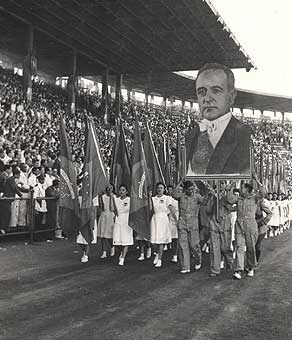
Eu quase posso ouvi-lo em minha imaginação, cheio dos “eles” e “erres” típicos dos gauchos, naquele som meio longinquo e chiado do radio de antigamente.
Me lembrei disso esta manhã quando li o artigo de Clovis Rossi, na Folha, dizendo que a queda de Trípoli deixa o Brasil do lado errado da História. E eu mesmo escrevi, semana passada, que é a primeira vez que isso acontece.
É verdade. Mas foi por pouco.
O Getulio Vargas hoje é tido como o grande herói da esquerda brasileira e esse discurso sumiu dos anais. Mas eu sei por fonte direta que ele esteve lá. A verdade histórica é que, até o momento em que não deu mais para continuar nessa, Getulio foi um fervoroso admirador do Hitler que, se fosse para nos enfiar na guerra, teria sido como o quarto elemento do “Eixo” (Alemanha, Itália e Japão).
Tinha razão.
Ele caiu depois que os soldados brasileiros voltaram da Itália se perguntando porque, diabos, deveriam continuar tolerando uma ditadura em casa depois de terem ido morrer pela democracia na Europa.
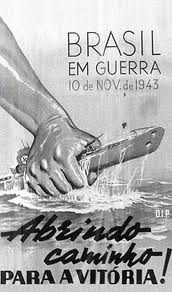
Uma boa quantidade dos que, logo adiante, vieram a se tornar os próceres da nossa esquerda, aliás, eram, naquela mesma época, “integralistas”, uma gente que gostava de vestir uniformes que lembravam os dos nazistas, fazer um tipo de “saudação” com o braço quase igual à deles e pensar as mesmas barbaridades que eles pensavam.
Nada a estranhar.
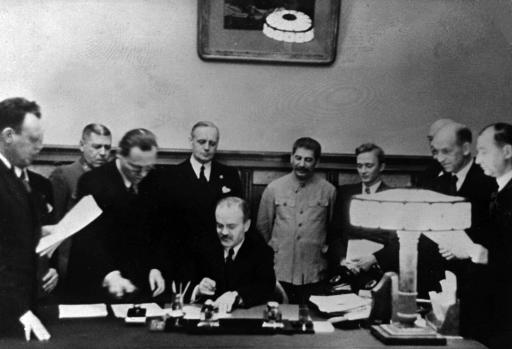
Afinal, a própria União Soviética, pátria do socialismo real que naquela época todos veneravam (e depois os mais desonestos entre eles continuaram venerando até que caísse de podre contaminada pelos seus próprios crimes) também tinha se aliado ao Hitler num acordo que só não permaneceu em pé porque o alemão era um louco furioso que atacava até os amigos.
Mas a verdade que remanesce é que antes que as doenças de cada um se exacerbassem a ponto de tornar as coisas mais claras, o socialismo bolchevista russo encontrava mais afinidades com o nacional socialismo alemão que com as democracias ocidentais.
O resto do mundo já sarou dessa doença. Mas aqui nesta nossa ilha cercada de língua portuguesa por todos os lados, esses “pormenores” incomodos continuam expurgados da história que se aprende nas escolas e que, segundo esse pessoal, foi feita mesmo para ser reescrita segundo as conveniências dos donos do poder.
Essa “circularidade” do espectro político, em que os extremos se tocam, sempre foi uma descrição bem mais fiel da realidade que a “polarização” com que os habitantes dessas pontas preferem se fazer representar. E Lula não inova nada também nesse campo.
A sua diplomacia alinhada aos apedrejadores de mulheres do Irã, aos decanos das ditaduras do mundo que, ha 52 anos, queimam livros, prendem e arrebentam em Cuba, aos genocidas do Oriente Médio e da África faz parte de uma sólida tradição das esquerdas de todos os lugares e todos os tempos de se aliarem frequentemente e de se comportarem quase sempre como aqueles que dizem execrar. E se não quisermos sair daqui para ficarmos só com as referências mais próximas dele, está aí para não nos deixar mentir a sua declarada admiração pelo general Geisel, com seu pendor estatizante, o dirigismo megalômano na economia e o estilo “ouça e obedeça” de tratar com a sua “tropa”.
Autoritário com autoritário; ditador com ditador. Nada de novo debaixo do sol.
To shorten the path to democracy
23 de maio de 2011 § Deixe um comentário
For a human being who would sacrifice everything so as not to sacrifice his own dignity, the final degree of hopelessness is having that very sacrifice go unacknowledged. A secret Stalin-like political assassination steals from a man not only his life but also its meaning, as well as his moral legacy.
His past, his present and his future are thus terminated.
The new communication technologies that operate outside the reach of national states have restored the value of human dignity as a means of political action. The sacrifices that must be made in order to build democracies can no longer be hidden from the public. Resistance has had its meaning restored.
That is how the ritual suicide of a simple fruit salesman in Tunisia set the Arab World on fire. That is what keeps burning revolts such as the one in Syria – sustained only with heroism, with none of the NATO’s firepower that stimulates resistance in Lybia and none of the media coverage that protected Egypt’s rebels.
I was in Norway on May the 11th, 12th and 13th, taking part in the Oslo Freedom Forum, in which 40 lecturers from around the world brought us their testimony on the struggle for human rights in their countries. This organization is different from its precursors as it shows real concern for human rights, refraining from singling out those who violate such rights according to whichever reasons are given for doing so.
There I had the opportunity of listening to terrible statements from the victims of some of the world’s most vicious dictators from regions of Asia and Africa not yet covered by the new communication technologies; of feeling firsthand the enthusiasm, the hopefulness and the apprehension of the youth that fuels the “Arab Spring” on the Internet; of listening to the dictators’ victims as well as the victims of terrorism in the war brought by ideology to the “peace and love generation” in Latin America; of tasting the disillusion of those who, after years of struggle against dictatorships, are only beginning to understand how far they still are from attaining Democracy.
From Oslo we can conclude that these new technologies are powerful tools in tearing down dictatorships but can not do very much to build democracies.
Excluded its most extreme features, the meeting was like a film played in fast-forward portraying this newspaper’s saga, which started with the goal of forcefully obtaining from the Emperor the end of slavery and the creation of the Republic, survived two long periods of dictatorship, having played a decisive role in their downfall and, 136 years later, is still around in a country divided by the same usual power that, through the distribution of small privileges and “special rights”, institutionalize and disseminate the very corruption that erodes us so as to better exploit us indefinitely.
In order to better reproduce the very reality it wants to change, the Oslo Freedom Forum would do well to be divided into two different parts so as to include an opportunity to share experiences – possibly less exciting, but surely just as important – on the institutional solutions that have actually helped building and consolidating democracies in real-world situations.
That is precisely what we lack the most in a world in which all know what to reject in terms of political regime and also, almost instinctively, what to do in order to get rid of the regimes which are imposed on them, but very few know how to get ahead after this phase has been overcome.
As it enters the 3rd Millennium, having been excused of wasting any more time with the fallacies of ideology – the most auspicious confirmation I was able to gather from the new generation’s statements in Oslo – , humanity is now sufficiently mature to understand that Democracy is, above all, a matter of the quality of the institutional technology employed.
Ever since Ancient Rome, which succumbed decisively to corruption precisely for never having found an answer for this problem, a single aspect of the Republican model went through developments that have indeed improved Democracy’s quality. Those were the ones implemented to answer somewhat effectively the question: “How can we concretely empower those that, in the regime ‘of the people, by the people and for the people’, must be the ones in charge, so as to ensure they are properly obeyed by their elected representatives, which are the ones that must follow the people’s will?”
Improving the average level of education of a people is, without any doubt, the way of reaching these answers for the first time. But once a good solution is found, it should and must be copied elsewhere.
The most significant hurdle for this exchange is the fact that the few peoples that actually live in fully-fledged democracies today are generations away from the decisive moments of their conquests. They take for granted the rights they were born with and therefore indulge in debating small details as if they were matters of life and death.
And that helps the entire world – made more susceptible to trends and fashions by the ever increasing speed of communication – to forget the essentials and focus only on passionately debating that which is superfluous.
The differences to which every individual is entitled, whose debate now siphons all the energy that should be directed to obtaining the real thing, must, even by definition, remain outside the reach of any institutions. These are matters of personal choice; reflections of the exercise of freedom, and not prerequisites to attaining it.
In order to transform the history of the achievements that have broadened and consolidated civil liberties in real situations into practical advice and step-by-step scripts for those still far from obtaining them, it would be necessary for this history to be recollected, in each country, by foreign eyes, in a great common effort compiling a comparative history of national institutions.
That would be a fitting mission for those who seek to expand human rights throughout the world.
First published in O Estado de S. Paulo’s may 21st, 2011 edition
Thinking on democracy for 136 years
12 de maio de 2011 § 1 comentário
Estou em divida com os leitores do Vespeiro.
Tendo sido convidado pra participar do Oslo Freedom Forum, na capital da Noruega, que terminou ontem, com apenas 72 horas de antecedência, estive mergulhado na confecção do texto em que minha apresentação acabou apenas se baseando.
O texto começou sendo escrito em português mas logo partiu para uma versão em inglês que, no voo entre São Paulo e Oslo, chegou à forma final que apresento aqui apenas como um meio de saldar minha divida com os leitores do Vespeiro que ficou abandonado em função dessa corrida contra o tempo.
Na volta a São Paulo, no próximo dia 16, prometo trabalhar para apresentar o mais rapidamente possível a verão traduzida para o português.
I belong to a family that has been breathing journalism for the last 136 years.
That’s quite a perspective.
Journalism is the basic tool for promoting reforms in democracies. That puts you in the eye of the storm.
To be a journalist is really to live intensely the history of your times.
Our newspaper was born back when Brazil was still a monarchy, to advocate an end to slavery and the creation of the Republic. Ever since then we have been involved in a constant struggle with the people in power, often in an environment in which dedicating oneself to such activities is not exactly the best way to prosper and live in safety to a ripe old age.
Having taken an active part in all of the political movements the country has lived throughout these 136 years, O Estado de S. Paulo has been pegged by all of the governments the country has had since as their most bothersome opposition, mostly by those it has helped bring about.
We are collectors of episodes of armed intervention by the forces of the state, bombing attempts and censorship measures enacted by representatives of every different grade of the ideological spectrum that has been or tried to be in the country’s government.
We have broken from prison and taken into our newsrooms fugitives of all regimes.
There has been not a single member of this family that, in the four generations succeeding one another in this struggle, hasn’t been through upheavals that radically altered the course of their lives.
My grandfather was arrested 17 times and was exiled twice between the early 30s and the end of the war in Europe, which put an end to the dictatorship of Getulio Vargas, a Hitler sympathizer.
Brazil could then enjoy a brief period of Democracy.
In 1964, with the Cold War at its hottest, at a time when falling under Soviet influence meant forever saying goodbye to freedom, a military movement supported by our newspaper acted to prevent a coup in open preparation by the Socialists and installed a temporary government with the promise of holding new elections.
Less than a year later, after an editorial piece published in our newspaper denouncing the military plot to stay in power indefinitely, the last editorial page written by my grandfather before his death, opened a war against the new dictators and began a period of over 11 years of widespread censorship of the press, economic retaliation against the newspaper and episodes of torture against journalists and dissidents in general.
Fighting against the new dictatorship, organizing a resistance movement by means of a game of cat-and-mouse with the censors and the permanent effort in hiding, allowing to escape or setting free those persecuted by the regime, alongside the international human rights and freedom of press institutions, in which I, too, took part in the first half of my career in journalism, was the common struggle shared by the members of my generation and those of my father’s.
Nowadays, 26 years after the return of Democracy, our newspaper has once again been under censorship for the last 648 days, this time by virtue of a judicial sentence whose author is a judge close to a political figure that has its origins in the very political school founded by the dictator that my grandfather spent his life fighting against.
This man inaugurated his career as a member of the political party artificially created by the military rulers to lend them some resemblance of legitimacy. He became our first civilian president after the years of dictatorship by sheer accident. He was the vice-president negotiated with the military, by way of giving them an honorable way out. And took the country after the death, days before the tenure, of the would be president, one of the leaders of the movement that actually resisted the military dictatorship.
During his stint in the presidency, he gave out radio and TV stations to all of the country’s most backward politicians, thus enabling them – and himself – to perpetuate their own rule.
Crowning this brilliant trajectory, he has now become the president of the coalition that upholds in Congress the pseudo-Socialist government of Lula da Silva, who was elected by selling himself as a hero of the struggle against the dictators and a bulwark of political ethics.
What they all have in common is the skill and the lack of ethics necessary to manufacture impoverishment and then portray themselves as helpers of the miserable. A poorer version of the Portuguese art of socializing the little privileges so that a few can keep enjoying privately the bigger ones, keeping everyone, from businessmen to blue-collar workers benefitted with minuscule special rights, essentially dependent on their grants.
In other words, spreading and institutionalizing corruption.
Their success has benefited largely from the priceless contribution they receive from the intellectuals and democratic governments that, across the world, support their actions as long as they describe themselves as members of whichever ideological category is currently most fashionable in rich countries.
Fighting for Democracy in Latin America is something akin to a Sisyphean task. We always find ourselves back at the starting point.
In the saga my family has lived in this almost century-and-a-half the only front of progressive struggle that yielded significant fruit was our active involvement in improving the quality of education in Brazil, in which the highlight was the creation of the Universidade de São Paulo in 1936, the first University in the country to live up to such a name. My grandfather was one of its founders.
This was the school that originated all of the people who really helped the fledgling Brazilian Democracy reach new heights.
In the remaining Latin American countries, the outlook is, almost invariably, worse than Brazil’s. And this state of affairs stems from the same fundamental cause.
The financial crisis in the United States has had a nefarious effect on Latin American democracies.
Together with the reaping of generous rewards seen in Chinas state Capitalism, before which the greed of the entire world kneels down, it has deeply shaken the belief in the efficiency of democratic Capitalism as a tool of development, confirming once again that crime does pay and killing the arguments of those that put respecting human rights as a necessary condition of relations between governments.
The new turn in the Latin American vicious cycle brought about by these facts has resulted in a return, now without any ideals or utopias, of vague echoes of the Socialist speech in justifying a dangerous mix of old Populist tactics and organized crime methods.
Colonel Hugo Chavez, a sort of Fidel Castro wannabe with continental aspirations, and his wild bunch of Bolivarian Socialists fight a relentless war against freedom of press in Venezuela, Bolivia and Ecuador.
In Argentina, a country whose internal debt is financed largely with Venezuelan oil money follows suit. The Kirshners are going for a new rendering of the “unionist republic” of Juan Peron and act against the free press violently and objectively, knowing that their vision of power hinges on their ability to silence it.
In Nicaragua, another Chavez ally, Daniel Ortega, is treating the press with growing contempt.
Colombia, living in full democracy alongside Chile, was able to control, after years of fighting and countless lives lost, the drug-dealing guerrillas that for a long time turned that country into a living hell.
Now the nightmare of narco-terrorism has engulfed Mexico, where the corrupt police and the complacent government leave only the journalists as preferred targets.
The urgent matter of legalizing drugs is a reality that the international community must face up to at once, before it is too late.
Many believe today in a freer world made possible by the new developments brought about by the new information technologies.
In open societies is clear that they shall have that effect. And, indeed, international networks operating beyond the reach of national states have proved their worth as tools of resistance capable of exploiting cracks in monolithic regimes. Political violence must now be carried out in front of everyone, and that helps speeding up the mobilization of international solidarity.
This is, without any doubt, a substantial progress.
But as with every other tool created by man, these can also be used for evil purposes.
Virtual reality, without which no one can fully work or relate oneself in modern societies, is a mathematical reproduction of physical reality. Within this virtual world, instruments of oppression may also acquire a mathematical efficiency.
Those who have followed the hunt for Osama bin Laden may well imagine how that could one day be turned against each and every one of us.
There are no shortcuts.
Freedom is not a consequence of technology. Democracy, the art of organizing human societies for freedom, is a byproduct of education.
History is societies psychoanalyst. Only the peoples that clearly understand how they became what they are today can be in control of their own fates and avoid political exploitation. That is the goal of education.
Meanwhile, all we, on the press, can do is to fight and resist to avoid political setbacks beyond points of no return.
Among the most visible current threats against freedom, the one that most concerns me is the apparently irreversible process actually affecting the world’s economy.
It is mainly through our social capacity as workers and consumers that we exert our freedom. But China’s state Capitalism, with its competition that knows no rules or rights to property, has, year after year, pushed private companies all over the world to the arms of the state, forcing the consolidation of industry after industry in large monopolies, concentrating wealth in the hands of fewer and fewer people and destroying the labor and the consumer markets.
Diverse markets are Democracy’s habitat. And, presently, Democracy faces the same threat that has, since always, led different species to extinction on planet Earth: the suppression of its habitat.
Você precisa fazer login para comentar.